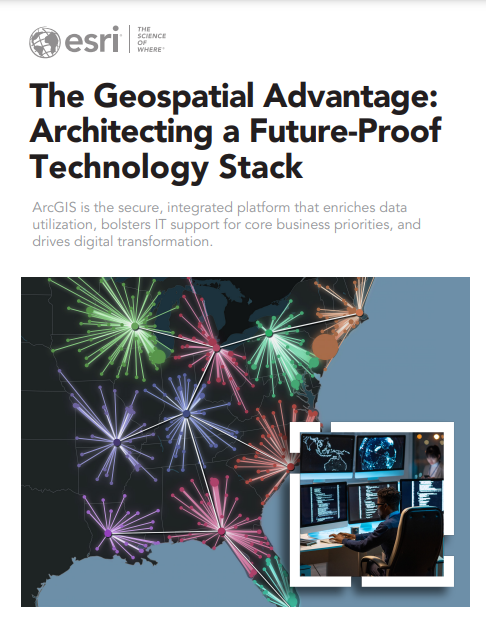
That’s why leading organizations are using geospatial technology–it unlocks this potential. It connects enterprise data through the context of location, allowing deeper insights to surface and creating value across the enterprise. Geographic information system (GIS) technology makes this possible. It empowers teams across the organization to simplify the visualization, analysis, and sharing of enterprise data.
For example, consider the strategic insights gained from correlating consumer behavior data with an organization’s physical asset distribution. While traditional analysis reveals customer data and reach capacity, integrating
this into a GIS platform transforms abstract relationships into intuitive, visual-based intelligence. The resultant smart maps and geospatial representation serve as a dynamic decision-making framework, enabling real-time scenario modeling, performance monitoring, and greater operational alignment across the enterprise.